Government services / Client project
Make a public institution easier to find, understand, and use.
A public-service website and Laravel CMS that brings BPPMT Pekanbaru's programs, services, public information, publications, and community resources into one institutional front door.
- Project
- BPPMT Pekanbaru web profile
- My role
- Full-stack developer
- Scope
- Public institutional website, content management, programs and registration, PPID, publications, complaints, and community catalog
- Built with
- Laravel 13, PHP 8.3, Blade, Livewire, Inertia, React, TypeScript, Tailwind CSS, MySQL
- Period
- 2026 · repository activity
- Project status
- Public site captured
Engineering focus
Connect public information to its CMS
Programs, publications, PPID documents, and services have structured editorial areas behind their public pages.
Scope staff actions by permission
Admin routes combine authentication and permission checks across content, programs, media, and user management.
Support tasks beyond reading
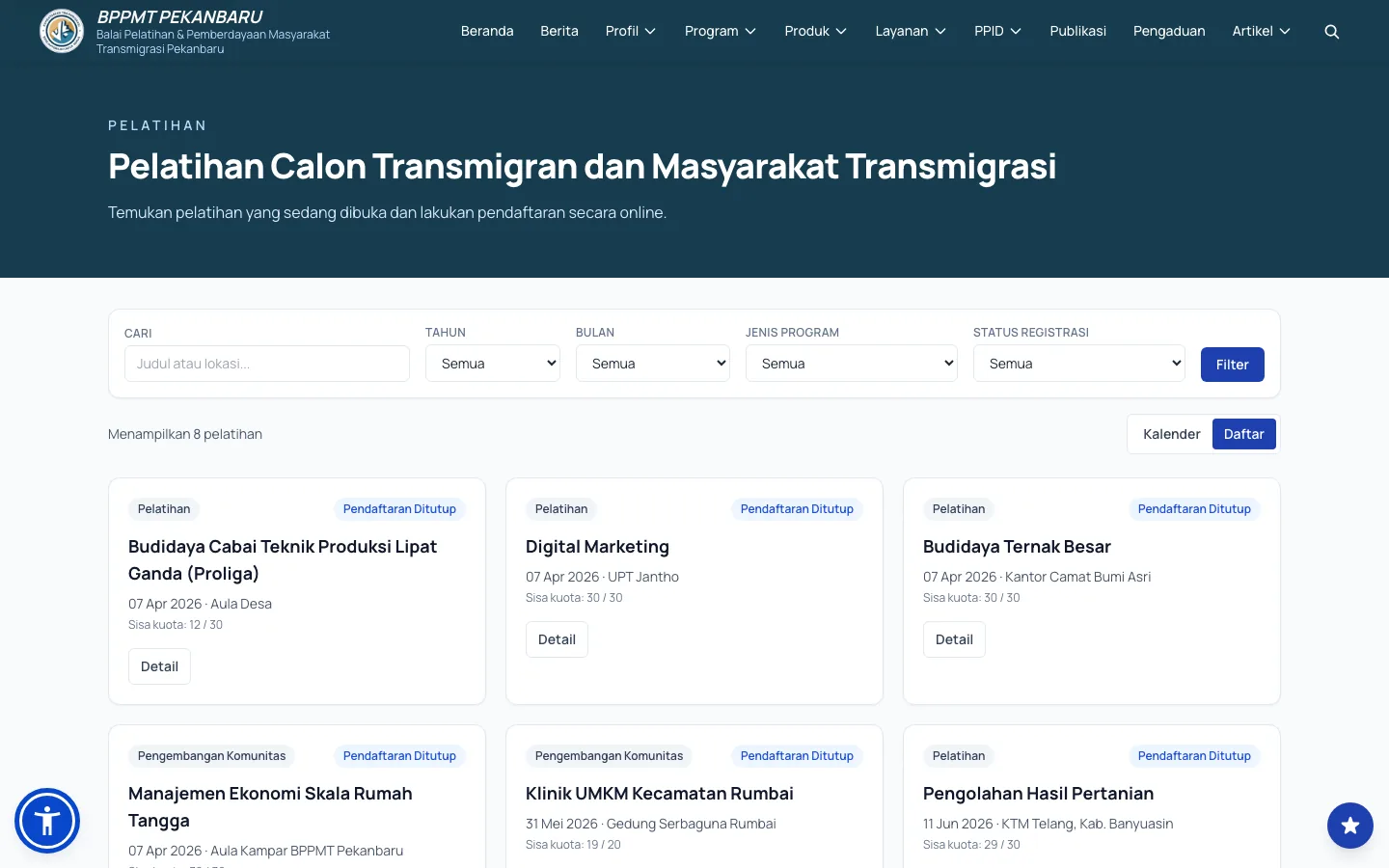
Training registration, document access, and complaint channels give visitors a next action after finding information.
Client project for BPPMT Pekanbaru. I contributed the Laravel CMS and public site implementation; the live profile and its institutional content are maintained by BPPMT. This case study describes the platform using the public site and local source, without exposing private admin records.
The inspected history runs from April to May 2026. The public-site and CMS portfolio captures were collected separately in September 2026. The owner supplied the public profile URL. Public pages were captured in September 2026; CMS examples use local development with synthetic content.
Give the institution one public front door
BPPMT Pekanbaru serves people who need very different things: a training opportunity, a public document, a service explanation, a contact route, or a clearer view of the communities and products it supports. Those paths are easy to lose when the site is treated as a collection of disconnected announcements.
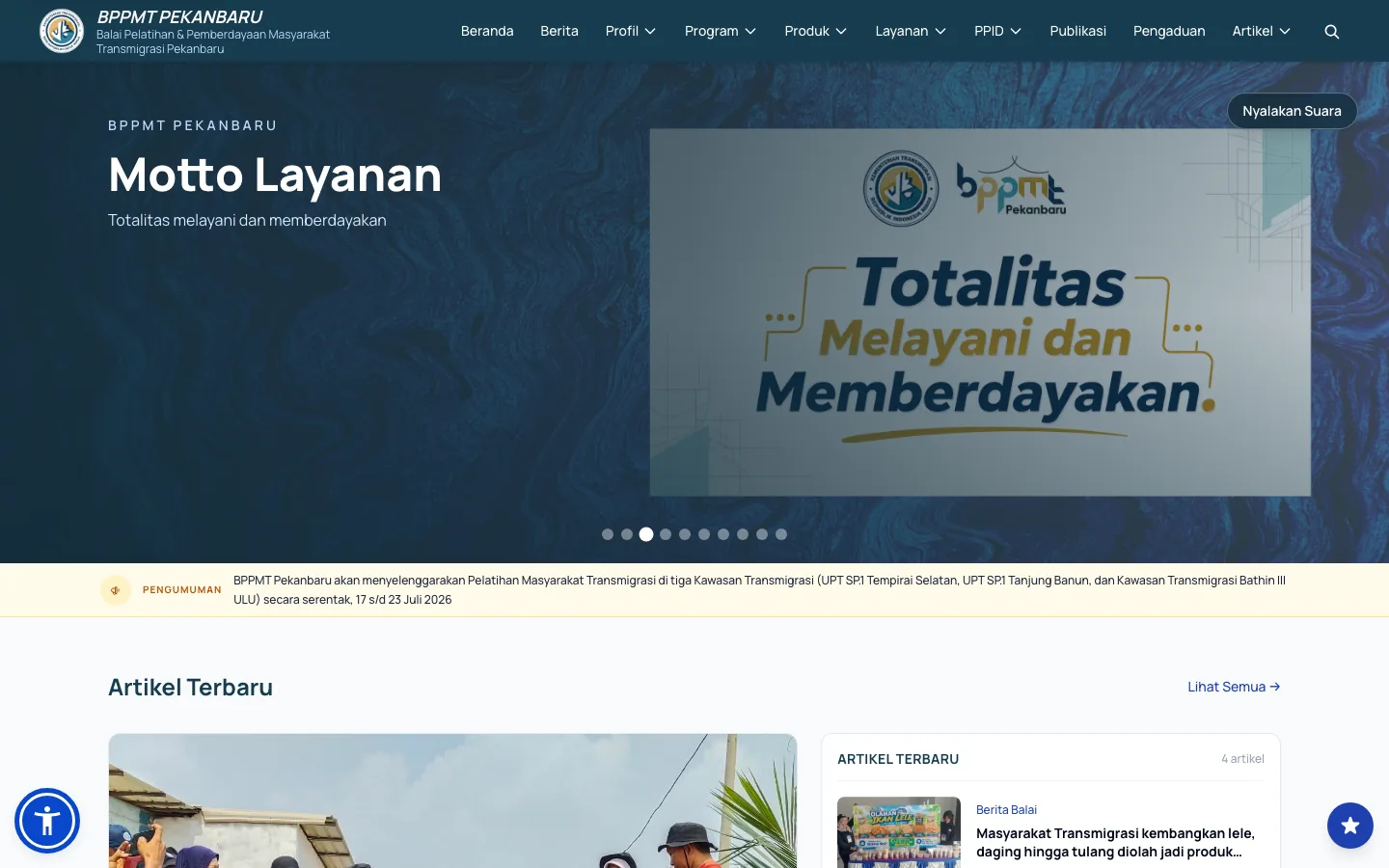
The web profile brings them into one public information architecture. Visitors can move from the institutional profile to programs, schedules, publications, PPID information, services, the community product catalog, and contact or complaint channels without leaving the same site.
Keep public content and staff work connected
The local project is a package-oriented Laravel application. The public site is server-rendered with Blade, Alpine.js, and Livewire; the staff CMS uses Inertia with React and TypeScript. Tailwind CSS keeps the two surfaces related while allowing the public pages and admin workflows to have different priorities.
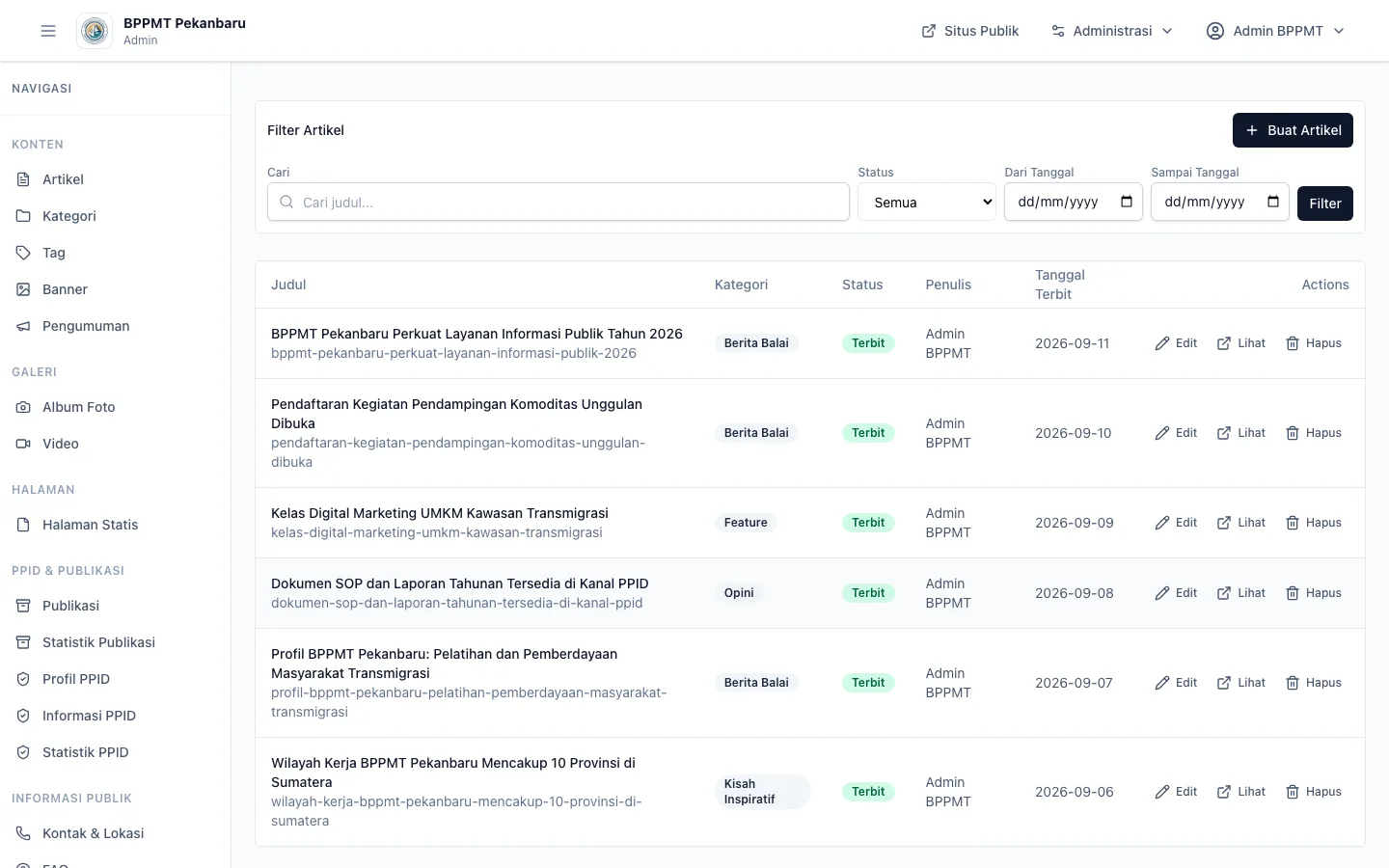
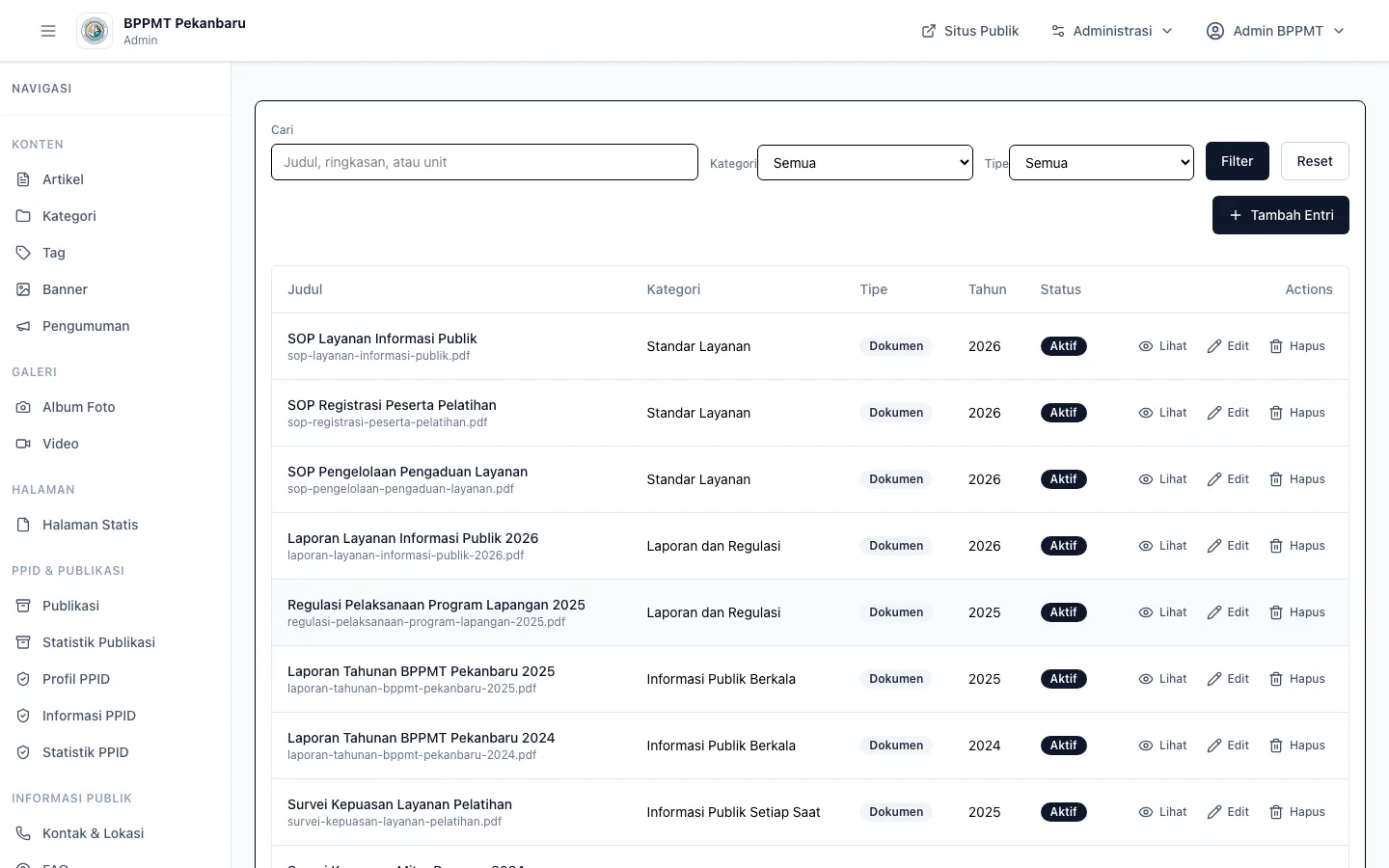
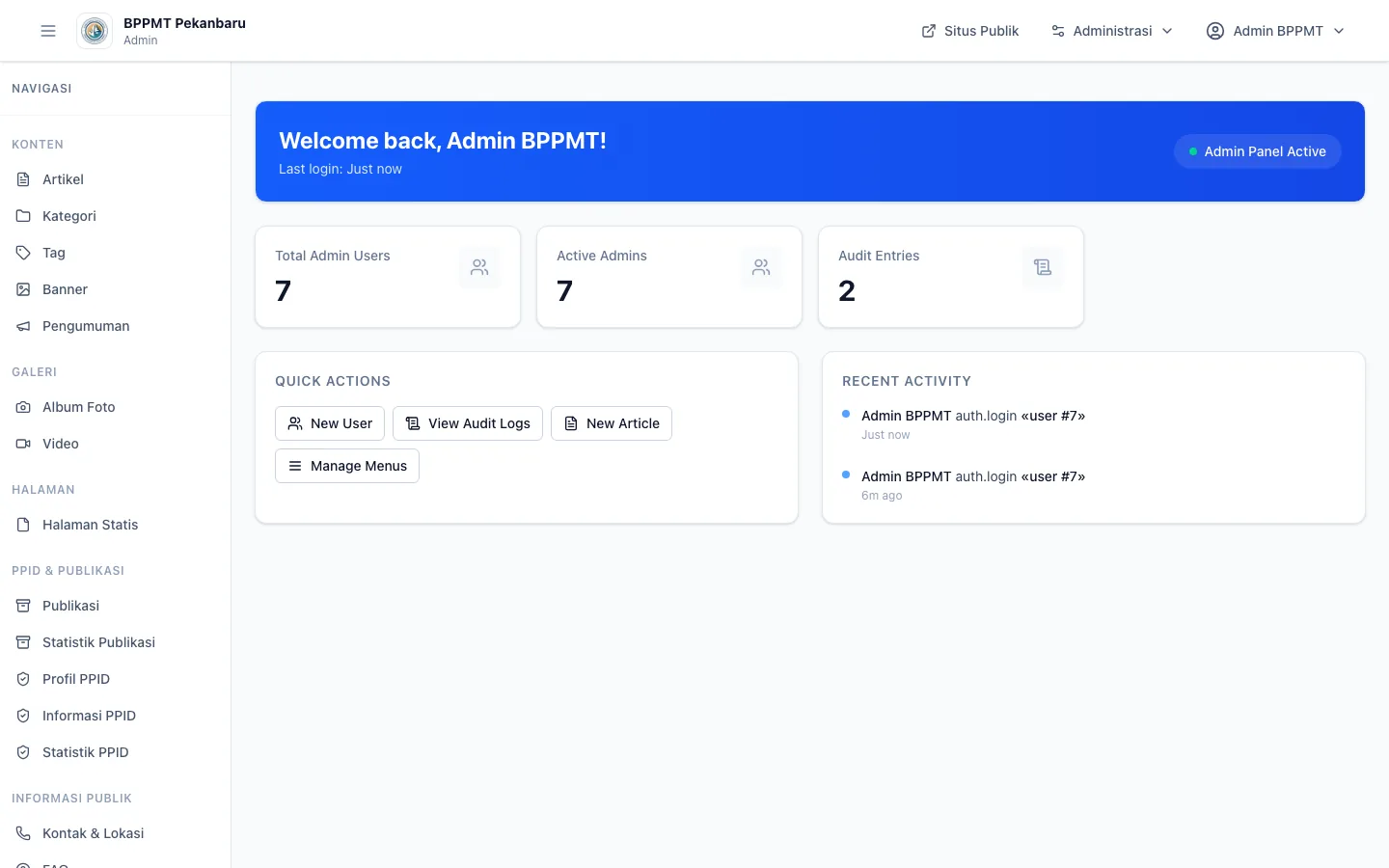
The CMS gives staff structured areas for news, banners, galleries, officials, programs, events and registration, publications, PPID documents, zones, commodities, services, FAQs, links, and complaints. That turns recurring updates into managed content instead of one-off page edits.
The admin routes apply authentication and permission checks to those areas. Publishing content, managing programs, and administering users are distinct operations with access rules on the server. For a client with several editorial responsibilities, this makes staff access part of the application design instead of relying only on which menu items appear.
Move from information to action
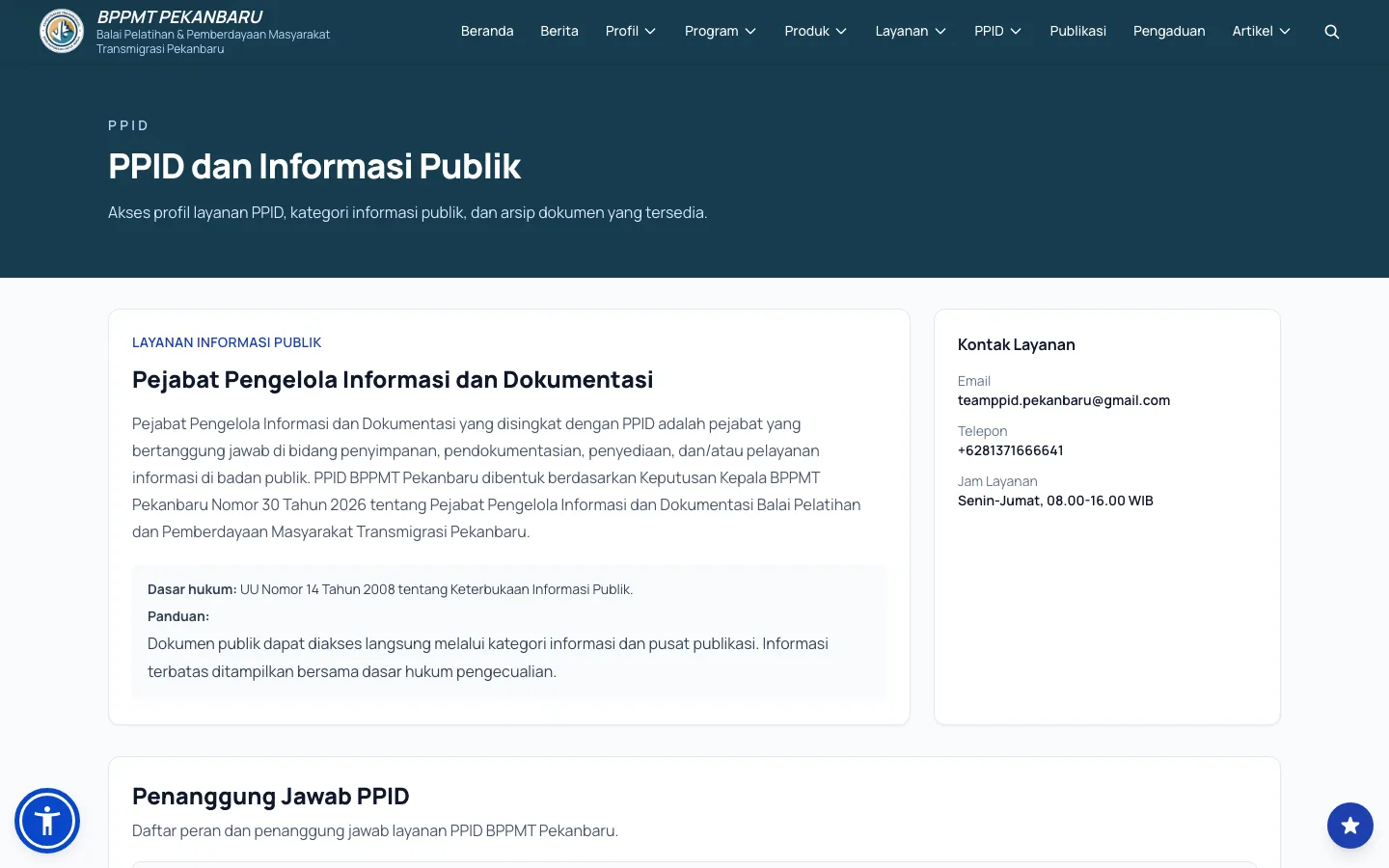
The public site is designed around the next step a visitor needs to take. A program can lead to its schedule and registration flow. A publication or PPID entry can explain its metadata and whether a download is available. A commodity can provide context about its origin and a direct inquiry route. A complaint page and homepage rating give visitors a lightweight way to respond.
The live profile is the evidence for the public experience. The local captures show the working CMS with synthetic seeded content; the live captures show the public homepage, training discovery flow, and PPID guidance as they appeared during this capture. Institutional content belongs to BPPMT Pekanbaru.
Built for a real institutional archive
This work combines a formal public presence with the operational structure behind it: role-based administration, scheduled program content, public document access, media, map and catalog data, and supporting service pages. The result is a site that can keep explaining the institution after the homepage announcement has changed.
Working application
The workflow, in practice.